
The Complete Guide to Traditional Argentine Food
Argentina’s food scene is one of the most underrated in the world. From slow-grilled meats cooked over open flames to no-bake desserts invented by an ad copywriter, Argentine cuisine blends indigenous traditions, European immigration, and fierce regional pride into something truly extraordinary. This guide covers everything you need to know about traditional Argentine food—the must-try dishes, iconic desserts, beloved drinks, best street foods, and practical tips for recreating it all at home.
Key Takeaways
- Argentine cuisine is shaped by indigenous Andean traditions and waves of European immigration—particularly from Spain and Italy.
- Asado and locro are two of Argentina’s official national dishes, each carrying deep cultural and historical significance.
- Dulce de leche is the cornerstone ingredient of Argentine desserts, from alfajores to chocotorta.
- Mate, Argentina’s national drink, is a social ritual as much as a beverage.
- Argentine Malbec—centered in Mendoza’s high-altitude wine regions—is softer and fruitier than its French counterpart.
What Makes Argentine Cuisine Unique?
Argentine cuisine sits at a fascinating crossroads. The country’s indigenous peoples—especially those of Andean and Guaraní descent—contributed foundational ingredients: corn, potatoes, squash, and yerba mate. Then came waves of European settlers. Spanish colonizers brought livestock and cooking techniques, while Italian immigrants—whose descendants now make up approximately 50% of Argentina’s population—introduced pasta, breaded cutlets, and a deep love of pizza.
Argentina is also one of only five countries in the world where cattle outnumber people. That fact alone explains a lot about the food culture here. Beef is not just an ingredient; it’s a social institution. But Argentina’s cuisine goes far beyond steak. Each region has its own culinary identity—the arid northwest serves hearty indigenous stews, Patagonia smokes fresh trout and roasts whole lambs, and Buenos Aires draws from Italian and Spanish traditions to produce world-class pizza and pastries.
Food in Argentina is fundamentally social. Meals are long, shared, and deeply tied to family and community. That spirit runs through everything from the asado ritual to the passing of a shared gourd of mate.
Traditional Argentine Dishes
Asado — Argentina’s Sacred Barbecue Tradition
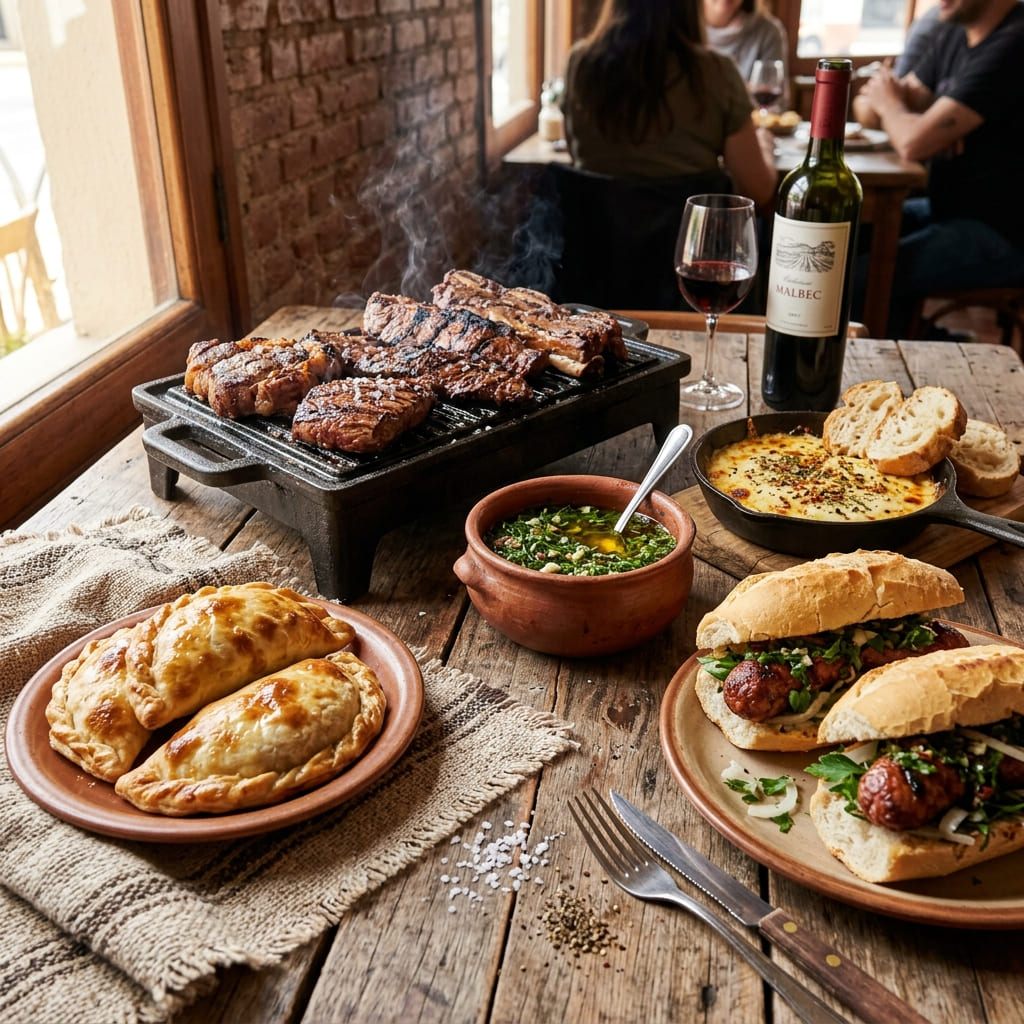
Asado is Argentina’s most iconic culinary tradition—and calling it just a barbecue undersells it significantly. Asado refers both to the method of grilling over wood embers or charcoal and to the social gathering built around it. A proper asado can last for hours and typically features:
- Achuras: offal cuts including chorizo, blood sausage (morcilla), and sweetbreads (mollejas)
- Meat cuts: short ribs, flank steak, and skirt steak
- Grilled provoleta cheese served as a starter
- Chimichurri: a herbaceous sauce of finely chopped parsley, oregano, garlic, chili flakes, olive oil, and a splash of vinegar or lemon
In Patagonia, expect to see whole lamb or pig roasted slowly over an open flame—a sight that’s as impressive to watch as it is to eat.
Empanadas — The Handheld Heart of Argentine Cooking
Empanadas are stuffed dough pockets, either baked or fried, and every Argentine province has its own version. The crimp pattern on the pastry edge traditionally signals what’s inside, so you can always grab the right one.
Common fillings:
|
Type |
Key Ingredients |
|---|---|
|
Beef (carne) |
Ground beef, onion, hard-boiled egg, olives, spices |
|
Ham and cheese |
Cooked ham, melted cheese |
|
Chicken |
Shredded chicken, peppers, herbs |
|
Sweet |
Dulce de leche, quince jam, or sweet potato paste |
Salta-style empanadas, from northwestern Argentina, are particularly famous for their juicy beef filling and spiced seasoning.
Milanesa — Italian Roots, Argentine Soul
Milanesa is Argentina’s take on the breaded cutlet—think schnitzel, but served with Argentine flair. Thinly pounded beef or chicken is coated in breadcrumbs and pan-fried until golden. The range of toppings is what makes it special:
- Milanesa a la napolitana: topped with tomato sauce, ham, and melted cheese
- Milanesa a caballo: crowned with a fried egg
- Served with french fries or a simple salad
It’s one of the most common lunch dishes across the country.
Choripán — The King of Argentine Street Food
Choripán is as simple as it is satisfying: a split pork-and-beef chorizo sausage nestled in a crusty roll, dressed with chimichurri. It’s sold at street stands, football matches, and roadside parrillas (grills) across the country. Depending on the province, you might also find caramelized onions, pickled eggplant, or roasted peppers layered in.
Locro — Argentina’s National Winter Stew
Locro has ancient roots. Its name comes from the Quechua word ruqru, tracing back to Andean indigenous civilization. It’s a thick, hearty stew made by cooking corn, white beans, squash, potatoes, and assorted meats—chorizo, pork ribs, beef jerky, bacon—over low heat for several hours.
The dish holds national significance: locro is traditionally eaten on May 25 and July 9, Argentina’s two main patriotic dates, commemorating the May Revolution (1810) and the declaration of independence (1816). It’s one of Argentina’s official national dishes alongside asado.
Locro is seasoned with quiquirimichi—a spiced oil sauce of ground chili, paprika, green onion, and salt—spooned over the top just before serving.
Provoleta — Grilled Cheese Worth Writing Home About
Provoleta is what happens when you take a thick slab of semi-hard provolone, season it generously with dried oregano and red chili flakes, and throw it directly on the grill. It caramelizes on the outside while softening in the center, then gets served with chimichurri and crusty bread. It’s a staple starter at any asado and one of the most beginner-friendly Argentine dishes to recreate at home.
Humita — A Celebration of Corn
Humita (humita en chala) is one of Argentina’s oldest indigenous foods. Fresh corn is creamed together with onion, spices, and goat cheese, then wrapped in corn husks and steamed or boiled until set. The result is dense, savory, and deeply comforting—served as both a snack and a main dish, especially in the northwestern provinces.
Carbonada — Stew Served Inside a Pumpkin
Carbonada is a rich beef and vegetable stew that earns extra drama from its serving vessel: a hollowed-out, baked pumpkin. The stew itself combines potatoes, sweet potatoes, corn, carrots, peppers, and dried fruits—apricots, raisins, peaches—giving it a sweet-savory depth that’s unlike anything else in Argentine cuisine. Diners scrape the inner walls of the pumpkin to enrich each bowlful.
Famous Argentine Desserts
Dulce de Leche — The Foundation of Argentine Sweet Cooking
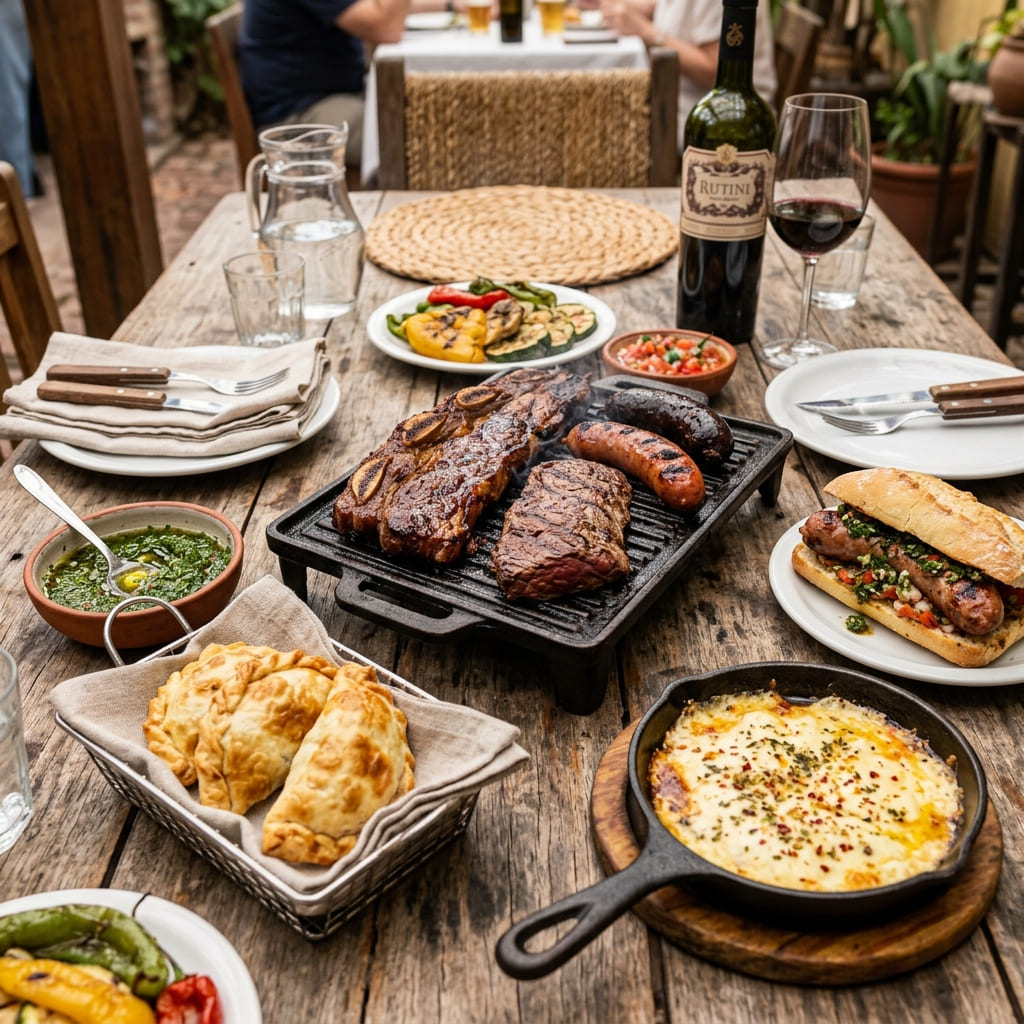
Dulce de leche is slow-cooked condensed milk reduced to a thick, golden, caramel-like spread. It appears in everything: cakes, cookies, ice cream, crepes, and dessert empanadas. No Argentine pantry is complete without a jar. If you want a single ingredient that defines Argentine dessert culture, this is it.
Alfajores — Argentina’s Beloved Cookie Sandwich
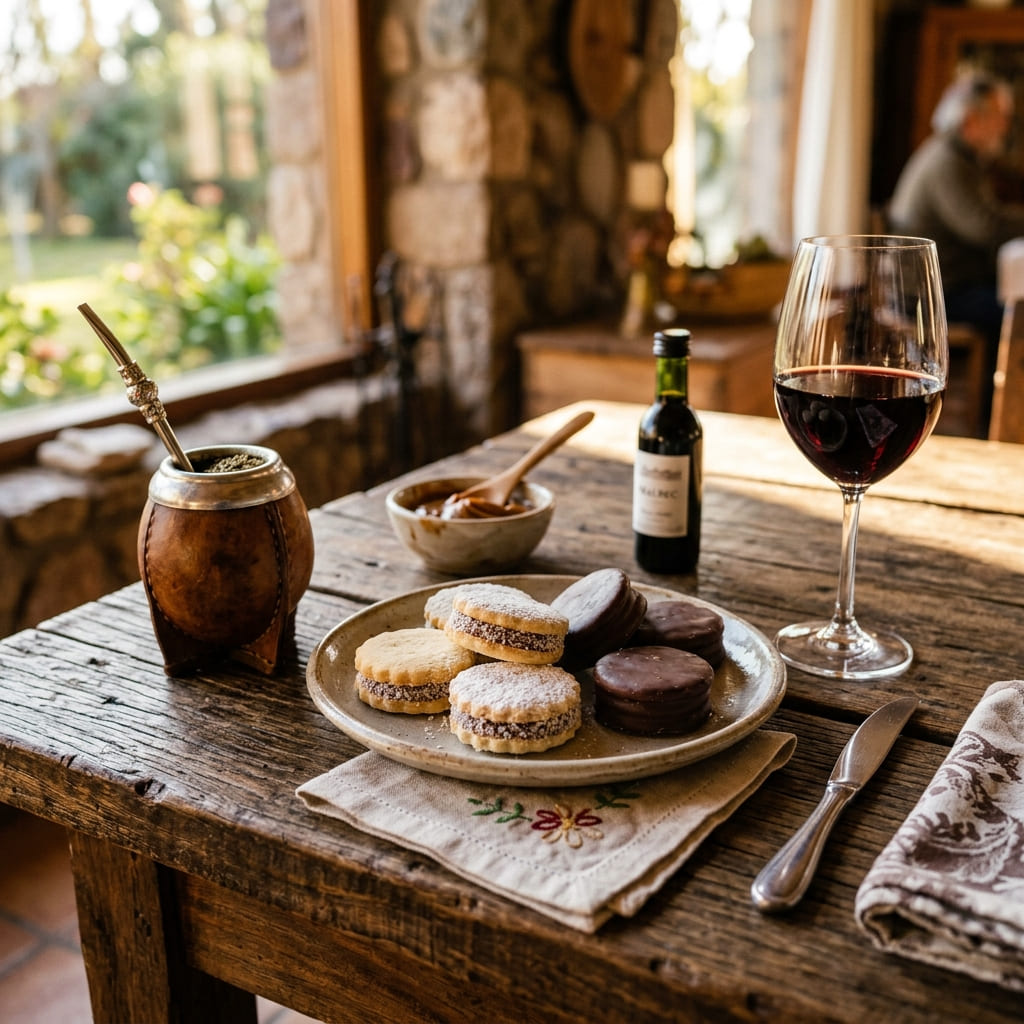
Alfajores are crumbly shortbread-style cookies sandwiched around a generous layer of dulce de leche, then rolled in shredded coconut or dipped in chocolate. Their origin traces back to the Arab world—brought to southern Spain by the Moors, then carried to South America by Spanish colonizers. Today they’re a national treasure, sold in every kiosk and bakery across the country.
Chocotorta — The Accidental Icon
Chocotorta was invented in 1982 by Marité Mabragaña, a copywriter at the Buenos Aires agency Ricardo De Luca Publicidad. She was tasked with promoting two client brands—Chocolinas chocolate biscuits and Mendicrim cream cheese—and came up with a no-bake layered cake that combined both. The recipe: chocolate biscuits dipped in coffee or cocoa milk, layered with a whipped mixture of cream cheese and dulce de leche, then refrigerated until set.
It spread through print advertisements in Argentine women’s magazines and became a household staple almost overnight. In 2020, TasteAtlas named chocotorta the best dessert in the world. It remains the first dessert many Argentine children learn to make.
Traditional Argentine Drinks
Mate — More Than Just a Drink
Yerba mate is Argentina’s national drink, and it functions as much as a social ritual as a beverage. The tradition originates with the Guaraní indigenous people, who first cultivated the mate plant. Dried and ground yerba mate leaves are steeped in hot (not boiling) water inside a hollowed gourd, then sipped through a metal straw called a bombilla, which doubles as a filter. The gourd is typically passed around a group, each person drinking before handing it back to be refilled.
Mate delivers a caffeine-like stimulant effect and is consumed throughout the day by millions of Argentines—on the way to work, in offices, and at family gatherings. Sharing mate is a gesture of welcome and connection.
Malbec Wine — Argentina’s Signature Export
Malbec was introduced to Argentina in 1868 by French agricultural engineer Michel Pouget. It has since become the country’s most widely planted red grape variety. Argentina’s leading Malbec region is Mendoza, which accounts for over 70% of the country’s total wine production. The highest-rated wines come from the high-altitude subregions of Luján de Cuyo and the Uco Valley (800m–1,500m above sea level).
Argentine Malbec vs. French Malbec:
|
Feature |
Argentine Malbec |
French Malbec (Cahors) |
|---|---|---|
|
Texture |
Soft, plush, rounded |
More tannic, structured |
|
Flavor profile |
Juicy red fruit, violet aromas |
Dark fruit, tobacco, earthier notes |
|
Color |
Deep purple |
Very dark, inky |
|
Typical pairing |
Asado, grilled meats |
Cassoulet, duck |
Best Street Food in Argentina
Argentine street food is unpretentious, satisfying, and built for eating on the move. The must-tries:
- Choripán — the definitive Argentine street food; grab one outside a football stadium for the full experience
- Empanadas — baked or fried versions sold at roadside stands throughout every province
- Medialunas — dense, slightly sweet Argentine croissants, eaten at breakfast with coffee
- Provoleta — commonly served at outdoor asado events and market stalls
- Pizza by the slice — Corrientes Avenue in Buenos Aires is the city’s pizza heartland; Argentine pizza features thick dough and an overload of mozzarella
Regional street food is just as rewarding: look for tamales and humita in Salta, chipá (cheese bread) in the Litoral region, and smoked trout in Patagonia.
Tips for Cooking Argentine Food at Home
You don’t need a wood-fired grill or imported ingredients to cook Argentine food well. These practical tips will help:
- For asado at home: Use a charcoal grill. Start with the fat cap up, letting it render slowly. Don’t rush with high heat—Argentine grilling is about patience and low, consistent temperature.
- For chimichurri: Make it at least 30 minutes ahead to let the flavors meld. Use flat-leaf parsley, not curly.
- For dulce de leche: If you can’t find it imported, simmer an unopened can of sweetened condensed milk in water for 2–3 hours (keep the can submerged). Let it cool completely before opening.
- For empanadas: Use a mix of ground beef, diced hard-boiled eggs, green olives, and sweet paprika for a classic filling. Brush with egg wash before baking for a golden finish.
- For chocotorta: Use any chocolate sandwich cookie if Chocolinas aren’t available. The key is dipping them just briefly—long enough to soften slightly but not so long they fall apart.
- For mate: Heat water to around 70–80°C (160–175°F), not boiling. Boiling water makes mate bitter.
Your Questions About Argentine Food, Answered
What is the most famous food in Argentina?
Asado is Argentina’s most famous food—a slow-grilled barbecue tradition that functions as both a cooking method and a social event. It’s one of Argentina’s two official national dishes, alongside locro.
What is dulce de leche made from?
Dulce de leche is made by slowly heating sweetened condensed milk until it thickens and caramelizes into a rich, golden spread. It’s the defining ingredient in Argentine desserts, including alfajores and chocotorta.
What is mate and how do you drink it?
Mate is an herbal drink made from steeped yerba mate leaves, served in a gourd and sipped through a metal straw called a bombilla. It’s Argentina’s national drink and a deeply social tradition—the gourd is typically shared and passed around a group.
What makes Argentine empanadas different from other empanadas?
Argentine empanadas are distinguished by their regional variety and crimping patterns, which signal the filling inside. Common fillings include spiced ground beef with olives and hard-boiled egg, ham and cheese, and sweet versions with dulce de leche.
What is the best Argentine wine?
Malbec is Argentina’s signature red wine. The most highly rated bottles come from the high-altitude subregions of Luján de Cuyo and the Uco Valley in Mendoza, where the altitude, sunny days, and dry climate produce grapes with exceptional depth and concentration.
Is Argentine food spicy?
Argentine food is generally not spicy by default. Chimichurri has a mild heat from dried chili flakes, and some regional stews like locro can be seasoned with spicy quiquirimichi sauce—but diners usually control how much heat they add.
What is chocotorta?
Chocotorta is a no-bake Argentine dessert invented in 1982. It consists of chocolate biscuits softened in coffee or cocoa milk, layered with a whipped mixture of cream cheese and dulce de leche. It was named the best dessert in the world by TasteAtlas in 2020.
Start Cooking Argentine Food Tonight
Argentine cuisine rewards curiosity. Start with chimichurri—it takes ten minutes to make and transforms any grilled meat. Then try a batch of empanadas for your next dinner gathering. Once you’ve made chocotorta, you’ll understand why it became a household staple overnight. The deeper you go, the more you’ll find: a cuisine shaped by history, geography, and an unwavering belief that the best meals are the ones shared with others.
Leave a Reply