
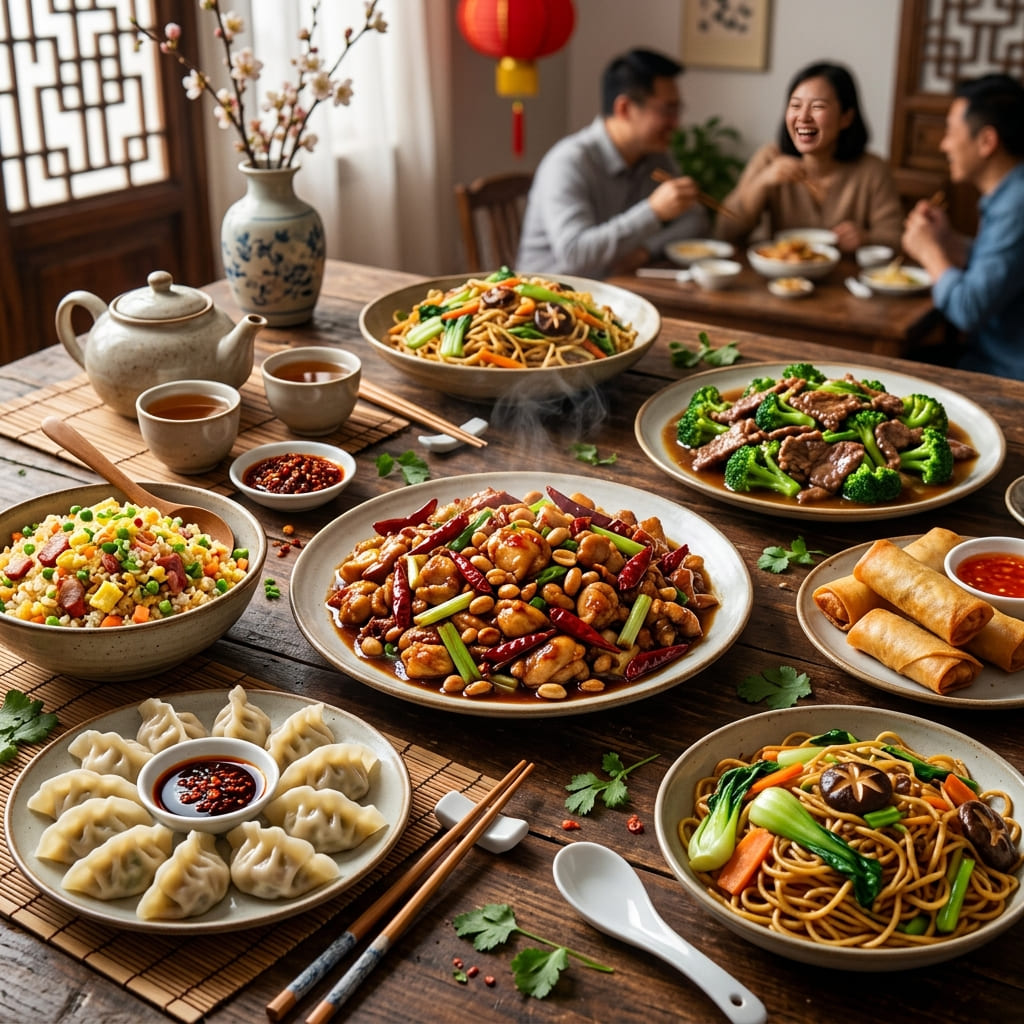
Chinese cooking at home is more approachable than most people think. With the right pantry staples, a handful of techniques, and a good wok, you can recreate restaurant-quality dishes in under 30 minutes. This guide covers 10 of the best homemade Chinese recipes from Kung Pao Chicken to Mapo Tofu—plus the essential ingredients, kitchen tools, and cooking tips you need to make every dish taste authentic.
Key Takeaways
- A small set of pantry staples (light soy sauce, oyster sauce, Shaoxing wine, sesame oil, cornstarch) powers the majority of homemade Chinese recipes.
- High heat is the single most important factor in achieving authentic stir-fry flavor—a cold wok produces steamed, soggy food.
- Most classic Chinese dishes, including dumplings, fried rice, and lo mein, can be made with commonly available supermarket ingredients.
- Ingredient substitutions like dry sherry for Shaoxing wine and tamari for soy sauce make Chinese cooking accessible to more home cooks.
- Homemade Chinese food tends to be significantly lower in sodium and fat compared to restaurant or takeout versions.
Why Make Chinese Food at Home?
The case for cooking Chinese food at home comes down to three things: control, cost, and flavor.
Restaurant and takeout versions of Chinese dishes are often loaded with sodium, MSG, and excess oil. At home, you decide exactly what goes in. Swap refined oils for peanut oil, reduce the salt, add more vegetables—the dish is yours to shape.
Cost is another factor. A single takeout order of Kung Pao Chicken might cost $15 to $20. Made at home, the same dish feeds four for roughly the same price.
And then there’s flavor. Fresh garlic, real Shaoxing wine, and a properly preheated wok produce a depth of taste that most delivery containers simply cannot replicate.
What Are the Essential Chinese Cooking Ingredients to Keep Stocked?
The foundation of nearly every homemade Chinese recipe comes from a small set of pantry staples. According to Maggie Zhu of Omnivore’s Cookbook, stocking the following six ingredients means you can cook almost any classic Chinese dish at home:
- Light soy sauce — The backbone of most stir-fry sauces. Saltier and thinner than dark soy sauce, it seasons dishes without turning them too dark.
- Dark soy sauce — Used for color and depth in braises and noodle dishes. A small amount goes a long way.
- Shaoxing wine — A fermented rice wine that deglazes pans, tenderizes meat, and adds fragrance. Dry sherry is the closest substitute.
- Oyster sauce — Thick, glossy, and savory, it gives stir-fries their restaurant-quality finish. Look for Lee Kum Kee Premium Oyster Sauce.
- Toasted sesame oil — A finishing oil, not a cooking oil. Add it after the heat is off to preserve its nutty aroma.
- Cornstarch — Used to velvet meat for tenderness and to thicken sauces into that signature glossy consistency.
Keep fresh ginger, garlic, and green onions in the fridge year-round. Together, these three aromatics form the flavor base of almost every savory Chinese dish.
What Kitchen Tools Do You Need for Chinese Cooking at Home?
You don’t need an elaborate setup. A few well-chosen tools make a significant difference:
|
Tool |
Why You Need It |
|---|---|
|
Carbon steel wok |
Conducts heat fast, develops “wok hei” (smoky flavor), and gets better with use |
|
Wok spatula |
Lets you scrape and toss ingredients without scratching the pan |
|
Bamboo steamer |
Essential for dumplings, buns, and steamed fish |
|
Spider strainer |
Scoops deep-fried or blanched food out of hot oil or water cleanly |
|
Rice cooker |
Produces consistent, perfectly cooked rice every time |
|
Sharp cleaver or chef’s knife |
Makes uniform slicing easier and faster |
A carbon steel wok is the most important investment. It concentrates heat, promotes the fast, high-temperature cooking that defines Chinese stir-frying, and builds a natural non-stick seasoning over time.
10 Best Homemade Chinese Recipes
1. Kung Pao Chicken
Prep time: 15 min | Cook time: 10 min | Serves: 4
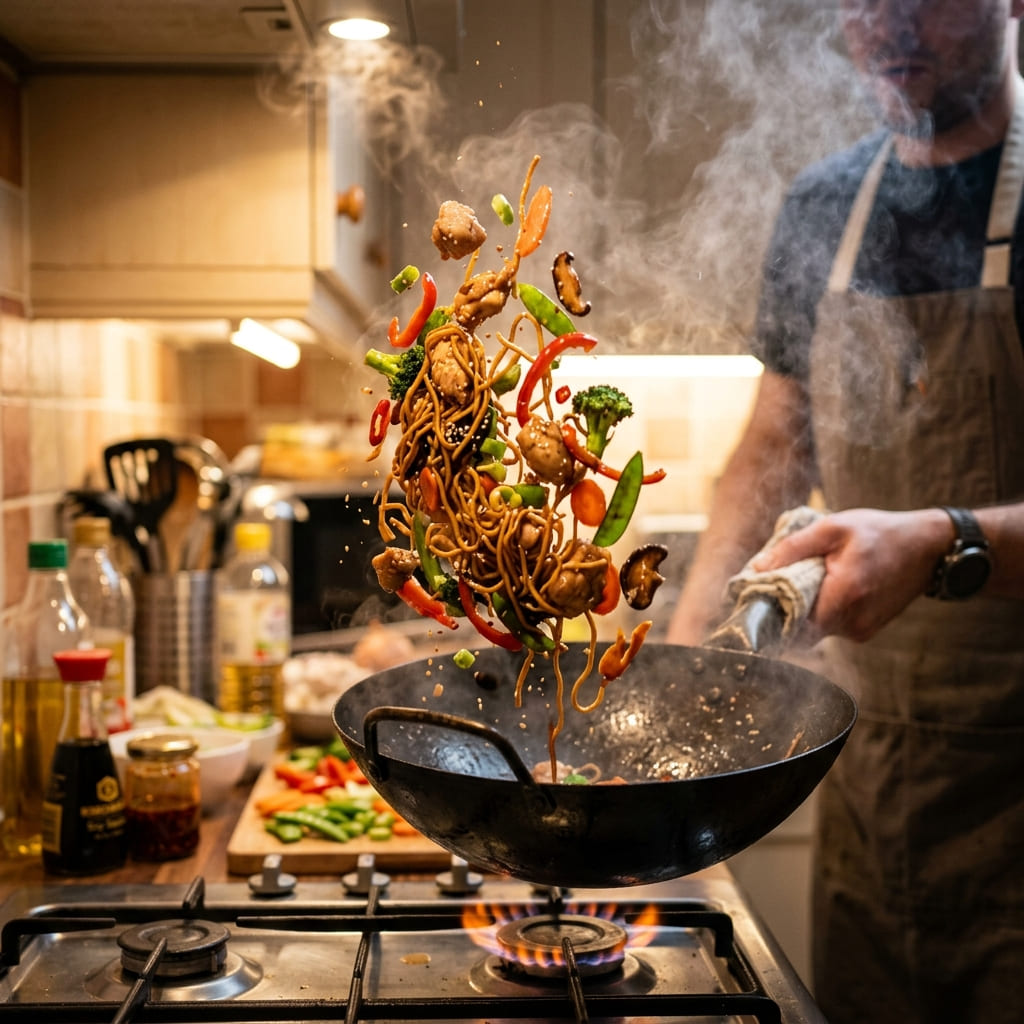
Kung Pao Chicken is a Sichuan classic—diced chicken, peanuts, and dried red chilies tossed in a savory, slightly sweet sauce with a hint of numbing heat from Sichuan peppercorns.
Key ingredients: Chicken breast, dried chili peppers, roasted peanuts, Sichuan peppercorns, light soy sauce, Chinkiang vinegar, Shaoxing wine, cornstarch
Quick method: Marinate diced chicken in soy sauce, cornstarch, and Shaoxing wine. Stir-fry dried chilies and Sichuan peppercorns in hot oil until fragrant, add chicken, then toss with sauce and peanuts.
Substitution: Skip the Sichuan peppercorns if unavailable—the dish will be spicy without the numbing element, but still delicious.
Approx. nutrition per serving: 320 calories, 28g protein, 18g carbs, 14g fat
2. Classic Fried Rice
Prep time: 10 min | Cook time: 10 min | Serves: 4
The secret to great fried rice is day-old, cold rice. Fresh rice is too moist and clumps together in the pan.
Key ingredients: Day-old jasmine rice, eggs, frozen peas, carrots, green onions, light soy sauce, toasted sesame oil
Quick method: Heat wok until smoking. Stir-fry eggs first, then add rice and press against the wok to toast. Add vegetables, soy sauce, and finish with a drizzle of sesame oil.
Substitution: Use cauliflower rice for a low-carb version.
Approx. nutrition per serving: 285 calories, 10g protein, 48g carbs, 7g fat
3. Sweet and Sour Chicken
Prep time: 20 min | Cook time: 15 min | Serves: 4
Crispy battered chicken coated in a tangy, vibrant sauce made from ketchup, rice vinegar, and pineapple juice.
Key ingredients: Chicken thighs, cornstarch, egg, ketchup, rice vinegar, sugar, pineapple chunks, bell peppers
Quick method: Coat chicken pieces in a cornstarch-egg batter and fry until golden. Make the sauce separately, then toss the chicken through it just before serving to keep the coating crisp.
Substitution: Use tofu instead of chicken for a vegetarian version.
Approx. nutrition per serving: 380 calories, 26g protein, 42g carbs, 11g fat
4. Beef and Broccoli
Prep time: 15 min | Cook time: 10 min | Serves: 4
A weeknight staple. Thinly sliced beef, velveted with cornstarch, stir-fried with broccoli and a savory oyster sauce–based glaze.
Key ingredients: Flank steak, broccoli, oyster sauce, light soy sauce, dark soy sauce, garlic, ginger, cornstarch
Quick method: Velvet sliced beef with cornstarch, soy sauce, and Shaoxing wine. Blanch broccoli briefly. Stir-fry beef over high heat, add broccoli, pour over sauce, and toss to coat.
Substitution: Swap flank steak for chicken thighs or mushrooms.
Approx. nutrition per serving: 340 calories, 32g protein, 16g carbs, 15g fat
5. Lo Mein Noodles
Prep time: 10 min | Cook time: 15 min | Serves: 4
Soft egg noodles tossed in a soy-based sauce with vegetables and protein. One pan, minimal cleanup.
Key ingredients: Lo mein noodles (or spaghetti), soy sauce, oyster sauce, sesame oil, cabbage, carrots, green onions, garlic
Quick method: Cook noodles, then stir-fry aromatics and vegetables. Add cooked noodles, pour over sauce, and toss everything together over high heat.
Substitution: Use spaghetti or linguine if lo mein noodles aren’t available.
Approx. nutrition per serving: 420 calories, 15g protein, 62g carbs, 10g fat
6. Egg Fried Rice
Prep time: 5 min | Cook time: 10 min | Serves: 2
Simpler than classic fried rice, this two-person dish comes together in under 15 minutes with ingredients most kitchens already have.
Key ingredients: Cold cooked rice, eggs, green onions, soy sauce, sesame oil, white pepper, peanut oil
Quick method: Scramble eggs in a hot wok and set aside. Fry cold rice until each grain is separate and lightly toasted, then fold in eggs, soy sauce, and green onions.
Approx. nutrition per serving: 310 calories, 11g protein, 50g carbs, 8g fat
7. Hot and Sour Soup
Prep time: 15 min | Cook time: 15 min | Serves: 4
A warming, deeply flavorful soup with a punchy balance of heat (white pepper) and tang (Chinkiang vinegar). The “hot” comes from white pepper—not chili—which is what distinguishes the authentic version.
Key ingredients: Chicken or mushroom broth, tofu, eggs, bamboo shoots, wood ear mushrooms, white pepper, Chinkiang vinegar, cornstarch
Quick method: Bring broth to a simmer, add mushrooms and tofu, stir in vinegar and white pepper, thicken with a cornstarch slurry, then drizzle in beaten egg while stirring to create thin ribbons.
Substitution: Use vegetable broth and skip the chicken for a vegan version.
Approx. nutrition per serving: 160 calories, 12g protein, 14g carbs, 5g fat
8. Homemade Dumplings (Jiaozi)
Prep time: 45 min | Cook time: 15 min | Serves: 4–6 (makes ~40 dumplings)
More time-intensive than other recipes on this list, but deeply rewarding. Dumplings freeze beautifully, making them a great batch-cooking project.
Key ingredients: Dumpling wrappers (or all-purpose flour + water for homemade), ground pork, napa cabbage, ginger, garlic, soy sauce, sesame oil, Shaoxing wine
Quick method: Mix pork with aromatics and seasonings. Wrap tablespoon-sized portions in dumpling wrappers. Pan-fry in a little oil, add water, cover to steam, then uncover to crisp the bottoms.
Substitution: Use ground chicken or shrimp instead of pork.
Approx. nutrition per serving (8 dumplings): 290 calories, 18g protein, 30g carbs, 10g fat
9. Orange Chicken
Prep time: 20 min | Cook time: 15 min | Serves: 4
Crispy fried chicken tossed in a sticky, citrusy orange sauce. A crowd-pleaser that’s easy to make at home with fresher, less-sweet results than the takeout version.
Key ingredients: Chicken thighs, cornstarch, orange juice, orange zest, soy sauce, rice vinegar, sugar, garlic, ginger
Quick method: Fry battered chicken pieces until golden. Simmer sauce ingredients until thickened, toss chicken through the sauce, and garnish with sesame seeds and sliced green onion.
Substitution: Use cauliflower florets for a vegetarian alternative.
Approx. nutrition per serving: 410 calories, 28g protein, 40g carbs, 14g fat
10. Mapo Tofu
Prep time: 10 min | Cook time: 15 min | Serves: 4
One of Sichuan cuisine’s most celebrated dishes. Silken tofu in a fiery, deeply savory sauce made with doubanjiang (fermented chili bean paste) and Sichuan peppercorns. The numbing, spicy sensation is the point.
Key ingredients: Silken tofu, ground pork, doubanjiang, light soy sauce, Sichuan peppercorns, garlic, ginger, chicken broth, cornstarch
Quick method: Fry ground pork until browned, add doubanjiang and aromatics, pour in broth, then gently add tofu cubes. Thicken with a cornstarch slurry, finish with Sichuan peppercorn oil and green onions.
Substitution: Omit pork and use mushrooms for a vegetarian version. Reduce doubanjiang for a milder heat level.
Approx. nutrition per serving: 280 calories, 20g protein, 10g carbs, 18g fat
What Are the Best Tips for Authentic Chinese Cooking at Home?
Authenticity in Chinese cooking comes from technique as much as ingredients. These principles apply across almost every recipe:
- Mise en place is non-negotiable. Stir-frying moves fast—sometimes under five minutes. Have every ingredient chopped, measured, and ready before the wok hits the heat.
- Velvet your meat. Toss thinly sliced beef or chicken in a mixture of cornstarch, soy sauce, and a little Shaoxing wine before cooking. This technique—called velveting—gives the meat a tender, silky texture that’s hard to replicate otherwise.
- Use a cornstarch slurry to finish sauces. Mix one tablespoon of cornstarch with two tablespoons of cold water and stir it into your sauce as it simmers. It transforms a thin, watery liquid into the glossy, restaurant-style coating you’re aiming for.
- Don’t skip toasted sesame oil. Add it off the heat at the very end. Heat destroys its fragrance—so timing matters.
- Season in layers. Chinese cooking rarely relies on salt alone. Build flavor with soy sauce, oyster sauce, Shaoxing wine, and aromatics, tasting and adjusting as you go.
What Are the Most Common Mistakes When Cooking Chinese Food at Home?
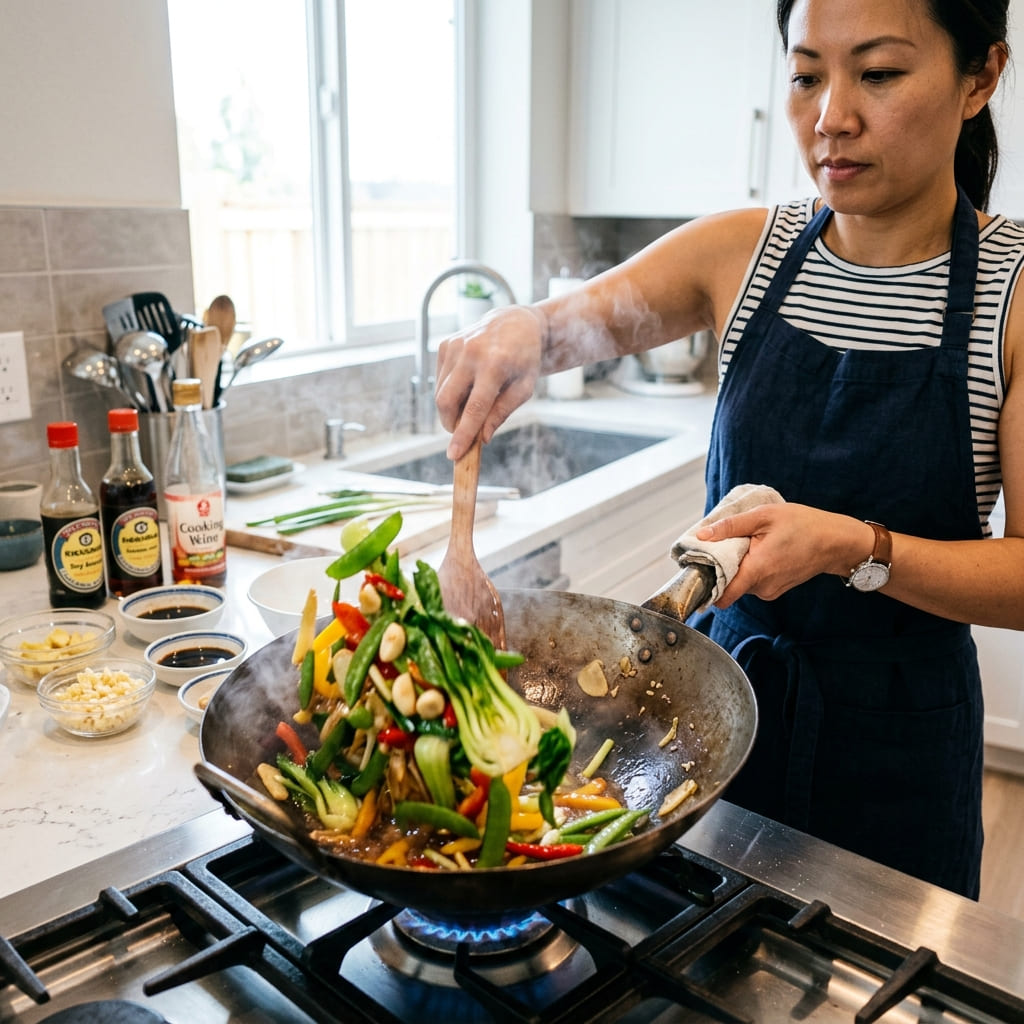
According to Marion’s Kitchen, these are the most frequent stir-frying errors—and how to fix them:
- Using the wrong pan. A wok is essential. Its deep, sloping sides concentrate heat and allow ingredients to move freely. A wide skillet works in a pinch, but results won’t be the same.
- Not getting the wok hot enough. The wok should be preheated until it starts to smoke before you add any oil. A cold wok steams food instead of searing it.
- Adding oil to a cold wok. Always heat the wok first, then add oil. Otherwise, your ingredients absorb the oil without getting the high-heat sear that creates flavor.
- Overcrowding the pan. Too many ingredients at once drops the wok’s temperature instantly, turning your stir-fry into a soggy steam. Cook in batches if needed.
- Cutting ingredients too large. Stir-frying cooks fast. Thick chunks of meat or vegetable won’t cook through before the outside burns. Small, uniform pieces are the goal.
- Using the wrong oil. High-heat cooking requires a high smoke point oil. Peanut oil, canola, and vegetable oil are all reliable choices. Butter, olive oil, and sesame oil will burn.
- A sauce that’s too thin or flat. Concentrate your sauces before using them. Watery, underseasoned sauces get diluted further by moisture released from proteins and vegetables during cooking.
How Can You Make Homemade Chinese Recipes Healthier?
Homemade Chinese food already tends to be healthier than takeout—but small swaps make an even bigger difference:
- Steam instead of fry. Dishes like dumplings and fish are delicious steamed and contain a fraction of the calories of their fried versions.
- Reduce soy sauce, increase aromatics. Ginger, garlic, and vinegar deliver big flavor without sodium. Try cutting soy sauce by a third and compensating with freshly grated ginger.
- Choose lean proteins. Chicken breast, shrimp, and tofu are lower in saturated fat than pork belly or beef—and work well in most stir-fry recipes.
- Use less oil. A well-seasoned carbon steel wok requires very little oil to prevent sticking.
- Add more vegetables. Most Chinese recipes can accommodate extra bok choy, spinach, snap peas, or mushrooms without any changes to technique.
- Swap white rice for brown rice or cauliflower rice to increase fiber and reduce the glycemic impact of the meal.
Frequently Asked Questions About Homemade Chinese Recipes
What are the easiest homemade Chinese recipes for beginners?
Egg fried rice and lo mein are the best starting points for beginners. Both require minimal prep, use a small number of ingredients, and teach the fundamentals of wok cooking. Once those feel comfortable, Kung Pao Chicken and Beef and Broccoli are natural next steps.
What can I use instead of Shaoxing wine in Chinese recipes?
Dry sherry is the closest substitute for Shaoxing wine. In a pinch, dry white wine also works. Avoid rice wine vinegar—it’s not the same product and will make the dish too sour.
Can I make authentic Chinese food without a wok?
Yes, though results will differ. A wide, deep stainless steel skillet or cast iron pan is the best alternative. The key is still high heat—use the largest burner on your stove and don’t overcrowd the pan.
How do I store leftover homemade Chinese food?
Most stir-fries, soups, and noodle dishes keep well in airtight containers in the refrigerator for 3 to 4 days. Dumplings freeze extremely well before cooking—lay them flat on a tray, freeze until solid, then transfer to a bag. Cook from frozen without thawing.
What is “velveting” and do I need to do it for every Chinese recipe?
Velveting is a technique where meat is coated in a cornstarch marinade before cooking, resulting in a tender, silky texture. It’s not required for every recipe, but it makes a noticeable difference in stir-fries like Beef and Broccoli and Kung Pao Chicken where the meat is thinly sliced and cooks quickly over high heat.
Is homemade Chinese food lower in sodium than restaurant versions?
Generally, yes. Restaurant Chinese food can contain 1,000 to 3,000mg of sodium per dish. At home, you control every ingredient. Using low-sodium soy sauce and reducing the amount of oyster sauce can bring individual dishes well within daily recommended limits.
How long do Chinese pantry staples last once opened?
Soy sauce, oyster sauce, and hoisin sauce last 1 to 2 years refrigerated after opening. Shaoxing wine keeps for several months at room temperature. Toasted sesame oil has a shorter shelf life—use within 6 months of opening and store in a cool, dark place to preserve its aroma.
Start Cooking: Your First Homemade Chinese Meal
Chinese cooking rewards preparation and patience—but not necessarily time. Most of the recipes in this guide come together in under 30 minutes once your pantry is stocked.
Start with egg fried rice or lo mein to get comfortable with wok cooking and high heat. Once those feel natural, move into Kung Pao Chicken or Beef and Broccoli. From there, the entire Chinese recipe canon opens up.
The most important step is stocking your pantry. Light soy sauce, oyster sauce, Shaoxing wine, sesame oil, and cornstarch will carry you through nearly every recipe on this list. Add fresh ginger, garlic, and green onions, and you have everything you need to get started.
Good food at home doesn’t require a professional kitchen. It requires the right ingredients, a hot wok, and the willingness to try.
Leave a Reply