
The half double crochet (HDC) is one of the first stitches every crocheter should learn. It sits comfortably between the short single crochet and the tall double crochet, giving you a soft, dense fabric that works up quickly. In this guide, you’ll learn exactly what the HDC stitch is, the tools you need, and how to make it step by step. You’ll also discover common beginner mistakes, easy project ideas, and answers to the questions crocheters ask most.
Key Takeaways
- The half double crochet (HDC) is a medium-height stitch made by yarning over before inserting your hook, then pulling through all three loops at once.
- HDC creates a thicker, warmer fabric than single crochet, making it ideal for blankets, hats, and scarves.
- The most common beginner mistake is miscounting stitches because the HDC’s top “third loop” can be confusing.
- HDC works up faster than single crochet but stays denser than double crochet—a great middle-ground stitch.
- Beginners can practice HDC on simple projects like dishcloths, cowls, and baby blankets.
What Is a Half Double Crochet (HDC)?
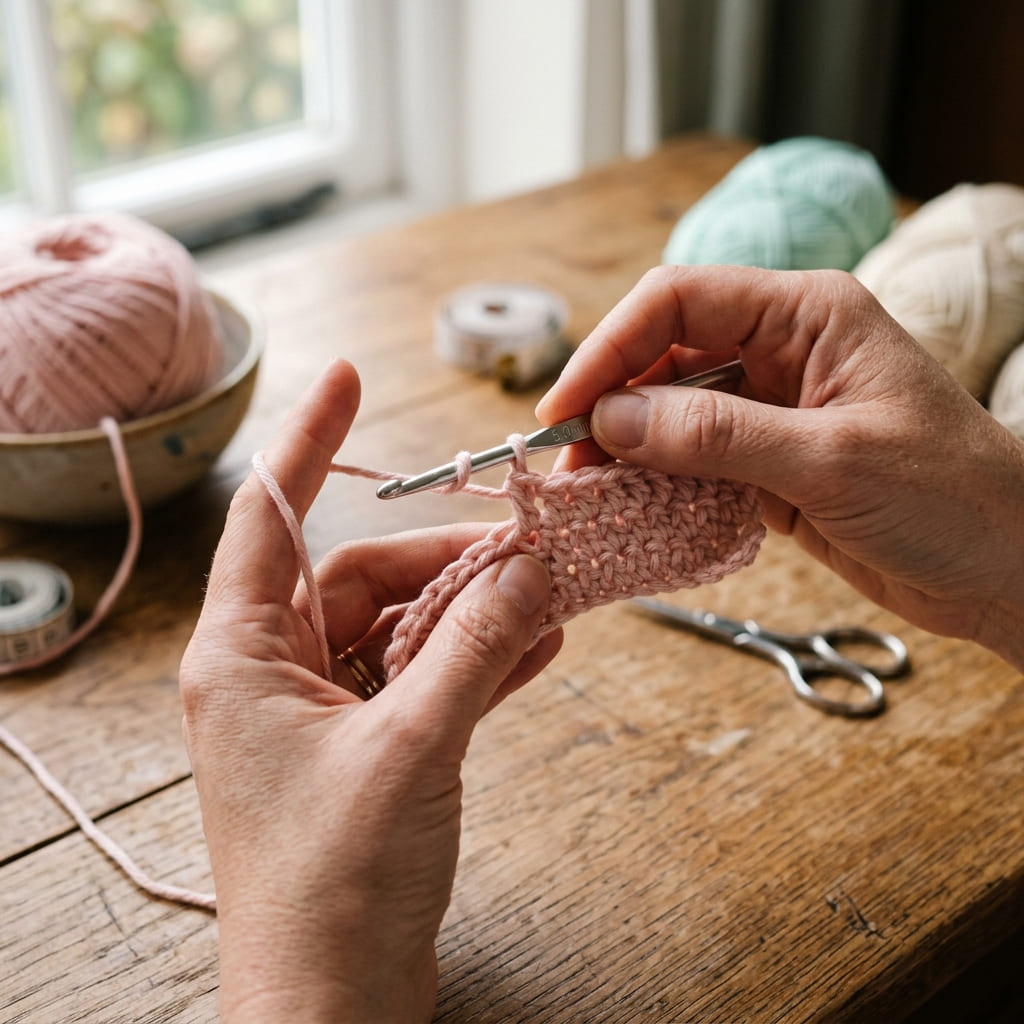
The half double crochet is a basic crochet stitch that’s taller than a single crochet but shorter than a double crochet. You make it by yarning over your hook before inserting it into the stitch, then pulling the yarn through all three loops on your hook in one motion.
That final step—pulling through three loops at once—is what sets the HDC apart. A single crochet pulls through two loops, and a double crochet pulls through loops in two separate steps. The HDC’s all-at-once finish gives it a unique, slightly bumpy texture and a sturdy feel.
Why crocheters love the HDC stitch
The HDC is popular for a few good reasons:
- Speed: It builds height faster than single crochet, so projects finish sooner.
- Warmth: The dense fabric traps heat well, perfect for winter wearables.
- Versatility: It works for everything from blankets to bags to garments.
- Texture: It produces a soft, slightly ridged look that hides small mistakes.
Abbreviations and terms to know
In crochet patterns, the half double crochet is abbreviated as hdc. You may also see these related terms:
- yo – yarn over
- st – stitch
- ch – chain
- lp – loop
- hdc2tog – half double crochet two together (a decrease)
US and UK terms differ. In the United States, this stitch is the “half double crochet.” In the United Kingdom, the same stitch is called the “half treble crochet” (htr). Always check which terminology a pattern uses before you begin.
Tools and Materials You’ll Need
You only need a few basic supplies to start practicing the half double crochet. Here’s what to gather:
- Yarn: A medium-weight (worsted, weight 4) yarn in a light color. Light shades make it easier to see your stitches.
- Crochet hook: A size H-8 (5 mm) hook pairs well with worsted-weight yarn. Check your yarn label for the recommended hook size.
- Scissors: For cutting yarn cleanly.
- Yarn needle: A blunt tapestry needle for weaving in loose ends.
- Stitch markers: Helpful for marking the first or last stitch of a row.
Choosing the right yarn and hook for beginners
Smooth, light-colored worsted-weight yarn is the best choice for learning. Avoid dark, fuzzy, or textured yarns at first—they hide your stitches and make mistakes hard to spot. A standard aluminum or ergonomic H-8 hook gives you good control while you practice.
How to Make a Half Double Crochet Step by Step
Follow these steps to create your first half double crochet. Practice on a foundation chain of about 15 to 20 stitches.
Step 1: Make your foundation chain
Create a slip knot, then chain the number of stitches your pattern calls for. For practice, chain 17. Remember that the first two chains count as your turning chain.
Step 2: Yarn over before inserting the hook
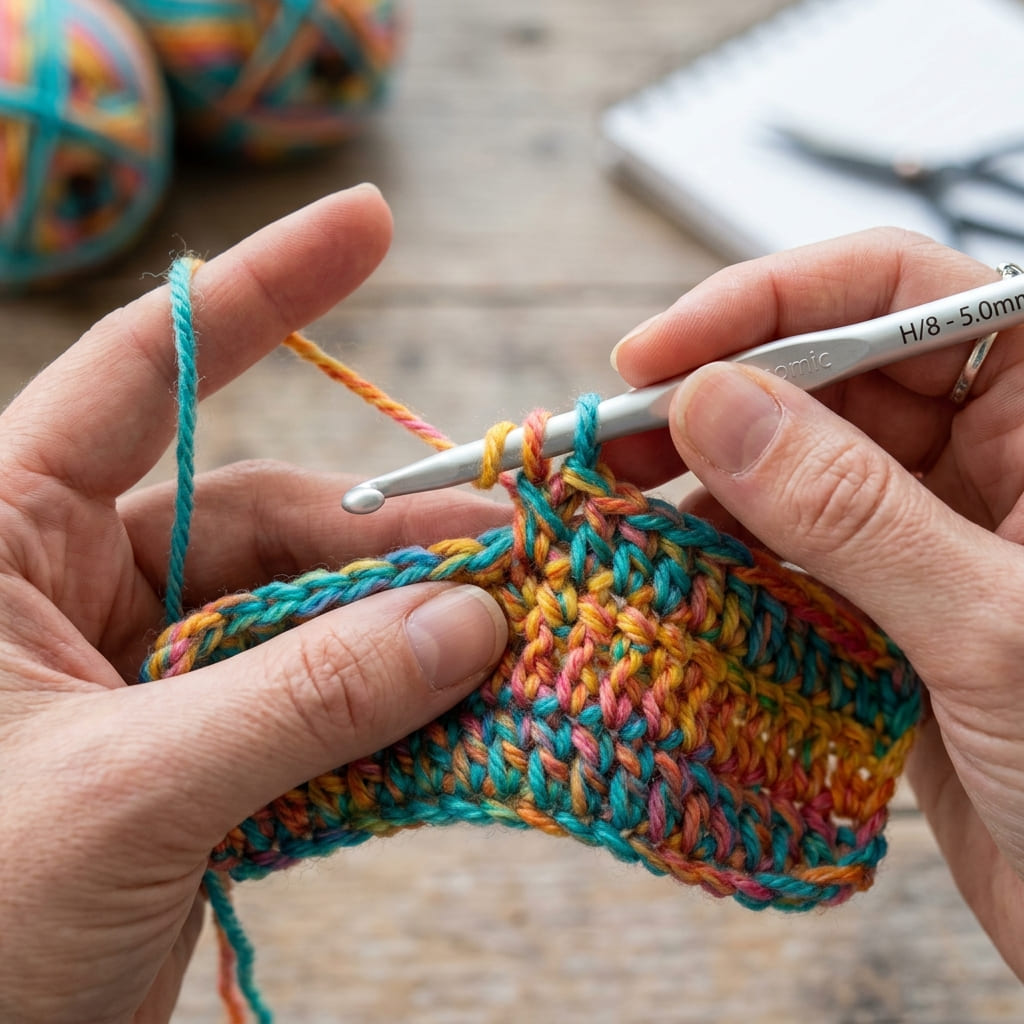
This is the step that makes a half double crochet different. Yarn over by wrapping the yarn around your hook from back to front before you insert the hook into the stitch.
Step 3: Insert your hook into the stitch
With the yarn already over your hook, insert the hook into the third chain from the hook (or the next stitch if you’re working into a row).
Step 4: Yarn over and pull up a loop
Yarn over again and pull the yarn back through the stitch. You should now have three loops on your hook.
Step 5: Yarn over and pull through all three loops
Yarn over one final time, then pull the yarn through all three loops on your hook at once. You’ve made your first half double crochet.
Step 6: Repeat across the row
Continue making HDC stitches across the row. When you reach the end, chain 2 to turn, and start your next row in the first stitch.
Quick recap: Yarn over → insert hook → yarn over → pull up a loop (3 loops on hook) → yarn over → pull through all 3 loops.
Common Mistakes and How to Fix Them
Beginners run into a handful of predictable problems with the half double crochet. Here’s how to spot and fix each one.
Mistake 1: Forgetting to yarn over first
The HDC starts with a yarn over before the hook goes in. Skip it, and you’ll accidentally make a single crochet. Fix: Say “yarn over” out loud before each stitch until it becomes a habit.
Mistake 2: Miscounting because of the third loop
The HDC creates an extra “third loop” that sits behind the usual two top loops. Beginners often mistake this for a stitch and lose count. Fix: Use stitch markers on the first and last stitch of each row, and count your stitches at the end of every row.
Mistake 3: Tension that’s too tight
Pulling the yarn too tight makes it hard to fit your hook through the loops. Fix: Relax your grip and let the yarn flow. If needed, go up one hook size while you learn.
Mistake 4: Wrong turning chain height
Too short a turning chain makes the edge pull in; too tall leaves a gap. Fix: Use a chain-2 turning chain for HDC, and stay consistent throughout your project.
Half Double Crochet vs Single Crochet vs Double Crochet
The three most common crochet stitches differ mainly in height and how you finish them. The table below shows how the half double crochet compares.
|
Feature |
Single Crochet (sc) |
Half Double Crochet (hdc) |
Double Crochet (dc) |
|---|---|---|---|
|
Height |
Shortest |
Medium |
Tallest |
|
Yarn over before inserting hook? |
No |
Yes |
Yes |
|
Turning chain |
Chain 1 |
Chain 2 |
Chain 3 |
|
Final step |
Pull through 2 loops |
Pull through all 3 loops at once |
Pull through 2 loops twice |
|
Fabric |
Dense, stiff |
Dense, soft |
Loose, drapey |
|
Speed |
Slow |
Medium |
Fast |
|
Best for |
Amigurumi, tight fabric |
Blankets, hats, scarves |
Shawls, lacework, fast projects |
Which stitch should you choose?
- Choose single crochet if you want a tight, firm fabric, such as for stuffed toys.
- Choose half double crochet if you want warmth and speed together—ideal for cold-weather accessories.
- Choose double crochet if you want a soft drape and quick progress, like for a lightweight shawl.
Beginner-Friendly Half Double Crochet Projects
Once you’re comfortable with the stitch, try one of these simple projects. Each one uses mostly HDC, so you can practice while making something useful.
1. Dishcloth or washcloth
A small square of HDC makes a thick, absorbent dishcloth. It’s the perfect quick win for a first project.
2. Simple cowl
Work HDC in rows, then sew the ends together for a cozy cowl. You’ll finish it in an afternoon.
3. Baby blanket
HDC’s dense fabric makes warm, soft baby blankets. Start small with a stroller-sized version.
4. Beanie hat
A basic beanie worked in HDC is warm and stretchy. Hats are a great way to learn working in rounds.
5. Scarf
A long rectangle of HDC creates a classic scarf. Add stripes to practice changing colors.
Tips for Improving Your Crochet Skills
Getting better at crochet comes down to steady practice and a few smart habits.
- Count your stitches every row. This catches mistakes early, before they ruin your shape.
- Practice consistent tension. Even tension makes your fabric look neat and professional.
- Watch video tutorials. Seeing the third-loop placement in motion helps it click faster than text alone.
- Use stitch markers. They take the guesswork out of finding your first and last stitches.
- Frog without fear. “Frogging” means pulling out stitches to redo them. It’s a normal part of learning, not a failure.
- Keep a swatch journal. Save small samples with notes on the yarn and hook you used.
Frequently Asked Questions
“You can read more in the article on the Home page.”
What is the difference between a single crochet and a half double crochet?
A single crochet does not start with a yarn over, and you finish it by pulling through two loops. A half double crochet starts with a yarn over and finishes by pulling through all three loops at once. The HDC is taller and works up faster.
Is half double crochet good for beginners?
Yes. The half double crochet is a great beginner stitch because it’s only one step more complex than single crochet, builds height quickly, and produces a forgiving fabric that hides small errors.
How many loops are on the hook in a half double crochet?
After you yarn over and pull up a loop, you have three loops on your hook. You then yarn over once more and pull through all three loops at the same time to finish the stitch.
What does HDC stand for in crochet?
HDC stands for “half double crochet” in US crochet terminology. In UK patterns, the same stitch is called “half treble crochet,” abbreviated htr.
What is the third loop in half double crochet?
The third loop is an extra horizontal loop that sits behind the two normal top loops of the stitch. Working into this third loop creates a ribbed, textured effect, and it’s also the loop that often confuses beginners when counting.
How much yarn do I need to learn the HDC stitch?
A single skein of worsted-weight (weight 4) yarn is plenty for practicing the half double crochet and making small projects like dishcloths or a cowl.
Which turning chain do I use for half double crochet?
Use a chain-2 turning chain for the half double crochet. Keep it consistent throughout your project to avoid uneven edges.
Start Stitching with Confidence
The half double crochet rewards you with warm, dense fabric and faster progress than single crochet—a winning combination for beginners. Master the simple rhythm of “yarn over, insert, yarn over, pull up, yarn over, pull through all three,” and you’ll have a stitch you can use for blankets, hats, scarves, and more. Pick up a light-colored worsted-weight yarn and an H-8 hook, then practice on a small dishcloth. With a little patience and a few rows of practice, the HDC will quickly become one of your go-to stitches.
Leave a Reply